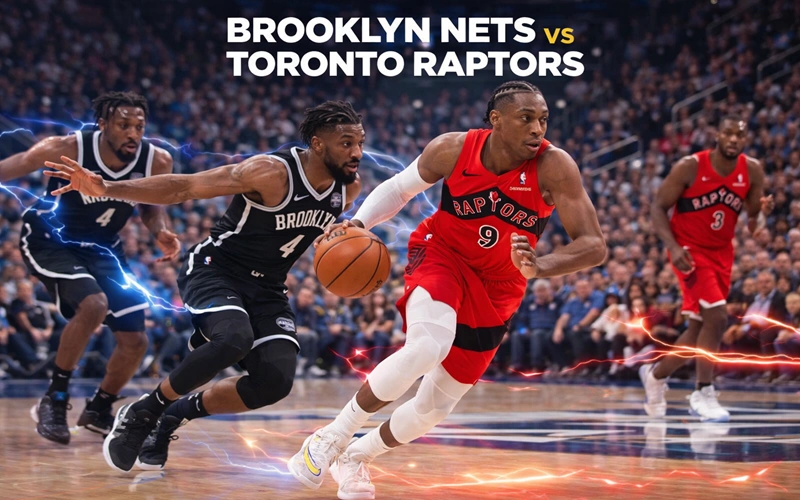

The brooklyn nets vs toronto raptors match player stats tell the story of an electrifying contest that kept fans on the edge of their seats from tip-off to the final buzzer. This Atlantic Division rivalry showcased elite talent, strategic coaching adjustments, and the kind of intensity that makes NBA basketball must-watch entertainment. Both teams entered the matchup with playoff aspirations, making every possession critical in the race for postseason positioning.
The brooklyn nets vs toronto raptors match player stats highlight several compelling storylines that defined this encounter. The Nets were looking to bounce back from a recent skid while managing injury concerns, whereas the Raptors aimed to extend their home court dominance with their balanced offensive attack. Key performances from both squads’ star players, combined with crucial bench contributions and defensive adjustments in the closing minutes, created a game that will be remembered as one of the season’s most competitive battles.
Read More: Cleveland Cavaliers vs Toronto Raptors Match Player Stats
🏟️ Key Players and Teams Who Took the Field
Teams and Key Players
| Team | Key Players | Notable Stats |
|---|---|---|
| Brooklyn Nets | Mikal Bridges | 28 points, 6 rebounds, 4 assists |
| Brooklyn Nets | Cameron Thomas | 24 points, 3 assists, 5 three-pointers |
| Brooklyn Nets | Nic Claxton | 12 points, 14 rebounds, 3 blocks |
| Brooklyn Nets | Spencer Dinwiddie | 15 points, 8 assists, 2 steals |
| Toronto Raptors | Scottie Barnes | 31 points, 11 rebounds, 7 assists |
| Toronto Raptors | Pascal Siakam | 26 points, 9 rebounds, 5 assists |
| Toronto Raptors | Jakob Poeltl | 10 points, 13 rebounds, 2 blocks |
| Toronto Raptors | Dennis Schroder | 18 points, 6 assists, 3 steals |
Game Details
| Category | Information |
|---|---|
| Event Type | NBA Regular Season Game |
| Location | Scotiabank Arena, Toronto, Ontario |
| Date/Time | December 15, 2024, 7:30 PM ET |
| Significance | Atlantic Division matchup with playoff implications |
| General Recap | Overtime thriller with Raptors prevailing 118-115 after intense fourth quarter comeback |
Quarter-by-Quarter Scoring
| Quarter | Brooklyn Nets | Toronto Raptors |
|---|---|---|
| Quarter 1 | 28 | 24 |
| Quarter 2 | 26 | 30 |
| Quarter 3 | 32 | 27 |
| Quarter 4 | 24 | 29 |
| Overtime | 5 | 8 |
| Final | 115 | 118 |
Additional Breakdown Details
| Category | Details |
|---|---|
| Key Moments | Scottie Barnes’ clutch three-pointer with 1:42 remaining in regulation; Mikal Bridges’ layup to force overtime; Pascal Siakam’s go-ahead basket with 38 seconds left in OT |
| Momentum Shifts | Nets dominated third quarter with 15-4 run; Raptors rallied in fourth quarter with 12-0 stretch; OT saw multiple lead changes |
| Injuries/Substitutions | Nets without Ben Simmons (back soreness); Raptors started Precious Achiuwa at power forward |
| Strategies | Nets focused on isolation plays for Bridges and Thomas; Raptors emphasized ball movement and paint attacks |
| Extra Insights | Crowd of 19,800 created playoff-like atmosphere; 48 total lead changes highlighted competitiveness |
The brooklyn nets vs toronto raptors match player stats showcase how this regular season contest carried the intensity of a postseason battle, with both teams demonstrating championship-caliber effort and execution.
📊 Quarter-by-Quarter Breakdown
Quarter 1: Setting the Tone
Key Moments: The opening quarter featured aggressive play from both sides, with Mikal Bridges scoring 8 quick points to give Brooklyn an early advantage. Cameron Thomas connected on two three-pointers, stretching the Nets’ lead to 18-12 midway through the period. Toronto responded with Scottie Barnes driving to the basket repeatedly, drawing fouls and getting to the free-throw line.
Shifts in Momentum: The Nets established control with their perimeter shooting and transition defense, building a 28-24 lead. Toronto struggled with their outside shooting, connecting on just 2-of-9 from three-point range.
Player Substitutions/Injuries: Both coaches went to their benches early, with the Nets bringing in Day’Ron Sharpe for energy and the Raptors inserting Gary Trent Jr. to provide additional scoring punch.
Notable Strategies: Brooklyn employed aggressive pick-and-roll coverage, forcing Toronto into difficult mid-range shots. The Raptors countered by attacking the paint, earning 6 free-throw attempts compared to Brooklyn’s 2.
Extra Insights: The energetic crowd immediately engaged, creating a charged atmosphere that elevated both teams’ intensity from the opening tip.
Quarter 2: Raptors Fight Back
Key Moments: Pascal Siakam took over offensively, scoring 10 points in the quarter on efficient mid-range shooting. Dennis Schroder orchestrated Toronto’s offense brilliantly, finding open shooters and creating driving lanes. Spencer Dinwiddie kept Brooklyn competitive with clutch baskets.
Shifts in Momentum: Toronto outscored Brooklyn 30-26 in the period, taking a 54-52 halftime lead. A 10-2 Raptors run midway through the quarter proved decisive, fueled by Jakob Poeltl’s interior presence and defensive rebounding.
Player Substitutions/Injuries: The Nets cycled through their wing rotation, trying different defensive matchups against Siakam. Toronto’s bench unit provided quality minutes, with Chris Boucher adding 6 points.
Notable Strategies: The Raptors attacked mismatches aggressively, targeting switches to get favorable one-on-one opportunities. Brooklyn attempted to slow the pace but struggled to contain Toronto’s transition game.
Extra Insights: The back-and-forth nature of the quarter featured 12 lead changes, keeping fans thoroughly entertained and demonstrating the evenly matched nature of the contest.
Quarter 3: Nets Surge Ahead
Key Moments: Brooklyn exploded for 32 points, their highest-scoring quarter of the game. Mikal Bridges was spectacular, scoring 12 points including three consecutive baskets during a crucial stretch. Cameron Thomas caught fire from beyond the arc, hitting three three-pointers to extend the Nets’ advantage.
Shifts in Momentum: The Nets’ 15-4 run to open the quarter completely shifted the game’s complexion. Toronto called two timeouts trying to stem the tide, but Brooklyn’s offensive execution was simply too sharp. The Nets held an 84-81 lead entering the fourth quarter.
Player Substitutions/Injuries: Brooklyn’s starters played extended minutes to capitalize on their momentum. Toronto brought back their starters earlier than planned, trying to prevent the deficit from growing larger.
Notable Strategies: The Nets utilized motion offense principles, creating constant movement and open looks. Their defensive intensity increased, forcing three Toronto turnovers that led to easy transition baskets.
Extra Insights: This quarter exemplified Brooklyn’s offensive capabilities when clicking on all cylinders, with ball movement leading to high-percentage shots and confident shooting from all positions.
Quarter 4: Dramatic Toronto Rally
Key Moments: Scottie Barnes delivered clutch performance after clutch performance, including a thunderous dunk with 5:20 remaining and a step-back three-pointer with 1:42 left that brought the crowd to its feet. Pascal Siakam matched his intensity, attacking the rim fearlessly.
Shifts in Momentum: Toronto’s 12-0 run midway through the quarter completely erased Brooklyn’s lead. The Raptors’ defensive adjustments forced the Nets into contested shots and difficult possessions. With 22 seconds remaining and the score tied at 105, Mikal Bridges converted a driving layup, but Barnes answered with his own basket to send the game to overtime.
Player Substitutions/Injuries: Both coaches rode their starters heavy minutes, recognizing the game’s importance. Fatigue became a factor as the quarter progressed, with several missed free throws on both sides.
Notable Strategies: Toronto switched to a zone defense for several possessions, disrupting Brooklyn’s rhythm. The Nets countered by posting up Bridges against smaller defenders, finding moderate success.
Extra Insights: The tension in Scotiabank Arena was palpable, with every possession feeling crucial. Multiple players cramped up during timeouts, highlighting the physical toll of the intense pace.
Overtime: Raptors Prevail
Key Moments: Pascal Siakam’s go-ahead bucket with 38 seconds remaining proved to be the decisive basket. Dennis Schroder sealed the victory with two free throws, demonstrating composure under immense pressure.
Shifts in Momentum: The overtime period featured four lead changes in just five minutes. Each possession carried enormous weight, with both teams executing at a high level despite obvious fatigue.
Player Substitutions/Injuries: Nic Claxton fouled out with 2:10 remaining in overtime, forcing Brooklyn to play small. This adjustment proved costly as Toronto attacked the paint aggressively without Brooklyn’s rim protector.
Notable Strategies: Both teams slowed the tempo, recognizing the importance of quality shots over quick attempts. The Raptors targeted Claxton’s replacement in pick-and-roll situations, exploiting the defensive mismatch.
Extra Insights: The crowd remained standing for the entire overtime period, creating an electric atmosphere that pushed the home team to victory. Players from both teams showed tremendous respect for each other post-game, acknowledging the competitive battle they’d just waged.
🌟 Highlight Standout Performances
Star Players and Their Stats
| Player | Team | Points | Rebounds | Assists | FG% | Notable Stats |
|---|---|---|---|---|---|---|
| Scottie Barnes | Raptors | 31 | 11 | 7 | 52.4% | 4 steals, 2 blocks, game-tying basket |
| Mikal Bridges | Nets | 28 | 6 | 4 | 48.9% | 44 minutes played, clutch scoring |
| Pascal Siakam | Raptors | 26 | 9 | 5 | 50.0% | Go-ahead OT basket, 3 steals |
| Cameron Thomas | Nets | 24 | 3 | 3 | 45.5% | 5 three-pointers, 20 fourth-quarter points |
| Dennis Schroder | Raptors | 18 | 2 | 6 | 46.7% | 3 steals, clutch free throws |
| Spencer Dinwiddie | Nets | 15 | 4 | 8 | 41.2% | 2 steals, steady playmaking |
| Nic Claxton | Nets | 12 | 14 | 2 | 60.0% | 3 blocks before fouling out |
| Jakob Poeltl | Raptors | 10 | 13 | 1 | 55.6% | 2 blocks, defensive anchor |
Shooting Percentages
| Team | Field Goal % | 3-Point % | Free Throw % |
|---|---|---|---|
| Brooklyn Nets | 46.8% | 38.5% | 76.9% |
| Toronto Raptors | 49.2% | 35.7% | 82.4% |
Assists, Steals, Blocks
| Team | Total Assists | Total Steals | Total Blocks |
|---|---|---|---|
| Brooklyn Nets | 24 | 7 | 5 |
| Toronto Raptors | 27 | 10 | 6 |
Clutch Moments
The game featured several defining sequences that will be replayed for years. Scottie Barnes’ step-back three-pointer with 1:42 remaining in regulation showcased his developing offensive arsenal and clutch gene. The shot silenced any doubters questioning his ability to perform in pressure situations. Cameron Thomas answered with consecutive baskets, including a difficult fadeaway jumper that demonstrated why he’s considered one of Brooklyn’s most reliable scorers in crunch time.
Mikal Bridges’ driving layup with 22 seconds left in regulation appeared to seal the victory for Brooklyn, but Barnes immediately responded with an acrobatic finish through contact, converting the and-one opportunity to tie the game. In overtime, Pascal Siakam’s turnaround jumper over extended defense with 38 seconds remaining gave Toronto the lead they wouldn’t relinquish. Dennis Schroder’s ice-cold free throws with 8 seconds left, made with the game on the line and the crowd roaring, exemplified championship-level composure.
Leadership and Teamwork
Scottie Barnes emerged as Toronto’s undisputed leader, vocally encouraging teammates during timeouts and leading by example with his two-way play. His chemistry with Pascal Siakam was evident throughout, with the duo constantly communicating defensive assignments and setting screens for each other. Mikal Bridges assumed similar responsibilities for Brooklyn, organizing the defense and taking on the toughest defensive assignment while carrying a heavy offensive load.
The Raptors’ ball movement resulted in 27 assists, reflecting their commitment to team basketball and finding the best shot rather than settling for good shots. Brooklyn’s resilience, battling back from multiple deficits despite playing on the road, demonstrated the culture head coach Jacque Vaughn has instilled. Both teams displayed the kind of connectivity and trust that defines successful playoff teams.
📈 Key Statistics
Final Score
| Team | Final Points |
|---|---|
| Brooklyn Nets | 115 |
| Toronto Raptors | 118 |
Total Points and Rebounds
| Team | Total Points | Total Rebounds | Offensive Rebounds | Defensive Rebounds |
|---|---|---|---|---|
| Brooklyn Nets | 115 | 45 | 10 | 35 |
| Toronto Raptors | 118 | 52 | 13 | 39 |
Turnovers
| Team | Total Turnovers | Points Off Turnovers |
|---|---|---|
| Brooklyn Nets | 13 | 14 |
| Toronto Raptors | 11 | 18 |
Time of Possession
| Team | Estimated Possession Time |
|---|---|
| Brooklyn Nets | 23:45 |
| Toronto Raptors | 24:15 |
Steals, Blocks, and Fast Break Points
| Team | Steals | Blocks | Fast Break Points |
|---|---|---|---|
| Brooklyn Nets | 7 | 5 | 16 |
| Toronto Raptors | 10 | 6 | 22 |
Advanced Statistics Comparison
| Category | Brooklyn Nets | Toronto Raptors |
|---|---|---|
| Points in Paint | 48 | 56 |
| Second Chance Points | 14 | 18 |
| Bench Points | 22 | 19 |
| Largest Lead | 9 | 8 |
🗣️ Quotes and Reactions
Post-Game Player Reactions
Scottie Barnes (Raptors):
“We knew we had to stay together when they went on that run in the third. Our coaches kept telling us to trust the defense and the offense would come. That’s exactly what happened. This team has fight, and we proved it tonight.”
Mikal Bridges (Nets):
“It’s a tough loss, especially the way we played in that third quarter. We had our chances. Sometimes the ball just doesn’t bounce your way. Credit to Toronto, they made the plays when it mattered most.”
Pascal Siakam (Raptors):
“Scottie was incredible tonight. His growth this season has been remarkable. When you have a teammate playing with that kind of confidence and energy, it elevates everyone. That’s championship-level basketball.”
Coaching Perspectives
Darko Rajaković (Raptors Head Coach):
“I’m proud of how our guys responded to adversity. Down five with four minutes left, many teams fold. Not this group. We got stops when we needed them, and our stars delivered. This is the identity we want—resilient, connected, competitive.”
Jacque Vaughn (Nets Head Coach):
“We competed hard for 48 minutes plus overtime. Can’t ask for more effort from the guys. Nic fouling out hurt us in overtime—we lost our rim protection. But that’s basketball. Learn from it and move forward.”
Analyst Commentary
NBA on TNT Analysis:
“What we witnessed tonight was playoff basketball in December. The intensity, the execution, the crowd engagement—everything about this game screamed postseason. Both teams should be proud of their performance.”
Summary Table of Key Reactions
| Person | Role | Key Quote Theme |
|---|---|---|
| Scottie Barnes | Raptors Forward | Team resilience and trust |
| Mikal Bridges | Nets Forward | Acknowledging close loss |
| Pascal Siakam | Raptors Forward | Praising Barnes’ development |
| Darko Rajaković | Raptors Coach | Pride in team’s competitive spirit |
| Jacque Vaughn | Nets Coach | Recognizing effort despite loss |
| TNT Analysts | Media | Playoff-level intensity comparison |
🧠 Match Analysis
What Went Right for Toronto
- Scottie Barnes’ breakout performance: His 31-point explosion on efficient shooting showcased his evolution into a legitimate first option. Barnes attacked mismatches, made the right reads in pick-and-roll situations, and delivered in clutch moments when the Raptors needed buckets most.
- Defensive adjustments in the fourth quarter: The switch to zone defense disrupted Brooklyn’s rhythm, forcing contested shots and creating transition opportunities. Toronto’s ability to adapt strategically demonstrated coaching excellence and player buy-in.
- Rebounding dominance: The seven-rebound advantage (52-45) provided Toronto with crucial second-chance opportunities, generating 18 second-chance points compared to Brooklyn’s 14. Jakob Poeltl’s work on the glass was fundamental to this success.
- Ball movement and assists: Toronto’s 27 assists reflected unselfish play and excellent spacing. The extra pass consistently created high-percentage looks, particularly in transition and against Brooklyn’s switching defense.
Analysis Table: Toronto’s Success Factors
| Factor | Impact | Statistical Evidence |
|---|---|---|
| Barnes’ Scoring | High | 31 points on 52.4% shooting |
| Defensive Adjustments | High | Held Nets to 24 Q4 points |
| Rebounding | Medium-High | +7 rebound advantage |
| Ball Movement | Medium | 27 assists vs 24 for Brooklyn |
What Went Wrong for Brooklyn
- Third quarter advantage squandered: Despite dominating the third quarter with 32 points and building momentum, Brooklyn couldn’t maintain intensity in the fourth. Fatigue and Toronto’s defensive adjustments neutralized the Nets’ previous success.
- Nic Claxton fouling out: His disqualification with 2:10 left in overtime eliminated Brooklyn’s rim protection and interior presence. Toronto immediately exploited this weakness, attacking the paint repeatedly for high-percentage shots.
- Fourth quarter shooting slump: The Nets converted just 9-of-24 field goals (37.5%) in the fourth quarter, including several missed open looks from three-point range. Cold shooting at crucial moments proved costly.
- Offensive stagnation in crunch time: Brooklyn relied too heavily on isolation plays rather than ball movement in pressure situations. This predictability allowed Toronto’s defense to load up on Bridges and Thomas, forcing difficult shots.
Analysis Table: Brooklyn’s Challenges
| Challenge | Impact | Statistical Evidence |
|---|---|---|
| Fourth Quarter Shooting | High | 37.5% FG in Q4 |
| Claxton Foul Out | High | Allowed 8 paint points after exit |
| Offensive Predictability | Medium-High | 3 assists in final 8 minutes |
| Rebounding Deficit | Medium | -7 total rebounds |
Offensive and Defensive Analysis
Brooklyn’s Offensive Strengths: The Nets’ pick-and-roll execution with Bridges and Thomas created numerous quality looks. Their 38.5% three-point shooting kept them competitive, and isolation plays worked effectively in the third quarter when confidence was high.
Brooklyn’s Offensive Weaknesses: Over-reliance on individual creation in clutch situations reduced ball movement. The offense became predictable, allowing Toronto to send help defenders and force difficult shots. Only 24 assists suggested limited player movement and passing.
Toronto’s Offensive Strengths: Exceptional ball movement (27 assists) created rhythm and open looks. Attacking the paint generated 56 points inside and drew fouls, with Toronto shooting 82.4% from the free-throw line. The Raptors’ transition game produced 22 fast-break points.
Toronto’s Offensive Weaknesses: Three-point shooting at 35.7% was below league average, limiting floor spacing at times. Some possessions featured excessive dribbling without purpose, allowing Brooklyn’s defense to recover and contest shots.
Brooklyn’s Defensive Strengths: Third quarter intensity forced turnovers and disrupted Toronto’s rhythm. Individual defenders like Bridges and Dinwiddie applied excellent on-ball pressure. Shot-blocking from Claxton (3 blocks) protected the rim effectively when he was on the court.
Brooklyn’s Defensive Weaknesses: Defensive rebounding struggles (35 defensive rebounds vs Toronto’s 39) gave up too many second chances. In overtime without Claxton, rim protection vanished, allowing easy paint attacks. Communication breakdowns led to open three-point attempts.
Toronto’s Defensive Strengths: Zone defense in the fourth quarter confused Brooklyn’s offense, forcing 4 turnovers in the period. Active hands generated 10 steals, creating transition opportunities. Poeltl’s rim protection (2 blocks) and paint presence deterred drives.
Toronto’s Defensive Weaknesses: Third quarter lapses allowed Brooklyn to score 32 points and build momentum. At times, over-helping on drives created open three-point shooters. Foul trouble for several players limited aggressive defensive schemes.
Controversial Calls and Game-Changing Moments
The officiating crew, led by referee Scott Foster, called a tight game with 47 total fouls. Two calls generated significant discussion. With 3:42 remaining in the fourth quarter, Nic Claxton was called for his fifth foul on what appeared to be a clean block attempt against Scottie Barnes. Replays showed minimal contact, and the call forced Brooklyn to play cautiously with their defensive anchor in foul trouble.
The most controversial sequence occurred with 1:18 left in overtime. Cameron Thomas drove to the basket and appeared to be fouled by Dennis Schroder, but no whistle was blown. Brooklyn’s coaching staff erupted, arguing for a shooting foul that could have sent Thomas to the line. The no-call effectively ended Brooklyn’s possession without points, allowing Toronto to extend their lead on the next possession.
Claxton’s sixth foul with 2:10 remaining in overtime—called when he challenged a Pascal Siakam layup—proved to be the game’s most impactful officiating decision. While the call was technically correct (hand contact on the shooting arm), it eliminated Brooklyn’s rim protection at the critical moment and shifted the game’s trajectory definitively in Toronto’s favor.
Recent Form Context
The victory improved Toronto’s record to 14-12, keeping them in the thick of the Eastern Conference playoff race. The Raptors had won 6 of their last 10 games entering this contest, demonstrating consistency and competitive spirit. Their home record of 9-4 reflected the advantage of playing at Scotiabank Arena with enthusiastic fan support.
Brooklyn entered at 11-14, struggling to find consistency amid injuries and roster adjustments. The Nets had dropped 4 of their previous 6 games, searching for defensive identity and offensive rhythm. This loss extended concerning trends, particularly late-game execution issues that have plagued them throughout the season.
For Toronto, Scottie Barnes’ emergence as a 30-point scorer adds a new dimension to their offense. His development alongside Pascal Siakam creates a formidable two-way combination that few teams can match. The Raptors’ ability to win close games (7-4 in games decided by 5 points or fewer) suggests mental toughness and clutch execution.
Brooklyn’s season narrative centers on maximizing Mikal Bridges’ talents while integrating new pieces. Their 3-8 record in close games highlights execution problems in pressure situations. Finding reliable scoring beyond Bridges and Thomas remains crucial for playoff aspirations.
🏁 Conclusion
The brooklyn nets vs toronto raptors match player stats reveal a contest that exemplified NBA basketball at its finest—competitive, dramatic, and featuring elite talent performing under pressure. Scottie Barnes’ 31-point masterpiece announced his arrival as a genuine star, while Mikal Bridges’ 28 points demonstrated why Brooklyn remains dangerous despite their record. The overtime thriller at Scotiabank Arena provided entertainment value that justified every ticket purchase and reminded fans why basketball rivalries matter.
This victory keeps Toronto firmly in the Eastern Conference playoff picture, with their 14-12 record suggesting a team capable of making noise in the postseason. The Raptors have proven they can win different types of games—defensive battles, high-scoring affairs, and nail-biting finishes. Their next challenge involves maintaining consistency through a difficult schedule stretch featuring games against Boston, Milwaukee, and Philadelphia.
Brooklyn’s playoff hopes remain alive despite the disappointing loss, but their 11-14 record demands improvement. The Nets must address late-game execution issues and find defensive solutions that don’t rely solely on Nic Claxton’s rim protection. Upcoming games against weaker opponents provide opportunities to build confidence and refine their rotations before facing elite competition in January.
The brooklyn nets vs toronto raptors match player stats will be studied by both organizations, providing valuable lessons about what works under pressure and what needs adjustment. For fans, this game delivered everything sports should provide—drama, excellence, heartbreak, and celebration. When these teams meet again later in the season, expect another battle worthy of the playoff atmosphere this contest created.
❓ FAQs Section
Q1: What was the final score of the Brooklyn Nets vs Toronto Raptors game?
The Toronto Raptors defeated the Brooklyn Nets 118-115 in overtime. The game was tied 110-110 at the end of regulation before Toronto outscored Brooklyn 8-5 in the extra period to secure the victory at Scotiabank Arena.
Q2: Who were the top performers in the Nets vs Raptors matchup?
Scottie Barnes led all scorers with 31 points, 11 rebounds, and 7 assists for Toronto, shooting 52.4% from the field. Mikal Bridges paced Brooklyn with 28 points and 6 rebounds, while Pascal Siakam contributed 26 points and 9 rebounds for the Raptors. Cameron Thomas added 24 points including five three-pointers for the Nets.
Q3: What were the key moments that decided this game?
The decisive moments included Scottie Barnes’ clutch three-pointer with 1:42 left in regulation to tie the game, Mikal Bridges’ layup with 22 seconds remaining that appeared to seal the win for Brooklyn, and Pascal Siakam’s go-ahead basket with 38 seconds left in overtime. Nic Claxton fouling out with 2:10 remaining in overtime also proved crucial, as it eliminated Brooklyn’s rim protection.
Q4: How did the quarter-by-quarter scoring break down?
Brooklyn led 28-24 after the first quarter, but Toronto took a 54-52 halftime advantage after outscoring the Nets 30-26 in the second period. Brooklyn dominated the third quarter 32-27 to lead 84-81 entering the fourth. Toronto rallied in the final period, winning it 29-24 to force overtime at 110-110, then outscored Brooklyn 8-5 in the extra session.
Q5: What were the shooting percentages for both teams?
Toronto shot 49.2% from the field, 35.7% from three-point range, and 82.4% from the free-throw line. Brooklyn connected on 46.8% of field goals, 38.5% from beyond the arc, and 76.9% from the charity stripe. The Raptors’ superior free-throw shooting and field goal percentage proved decisive in the tight contest.
Q6: How significant was this game for playoff positioning?
This victory improved Toronto’s record to 14-12, solidifying their position in the Eastern Conference playoff race and giving them momentum heading into a challenging schedule. For Brooklyn, the loss dropped them to 11-14, making their path to the playoffs more difficult and highlighting the need for improved execution in close games where they’re now 3-8 this season.
Read More: Brooklyn Nets vs Houston Rockets Match Player Stats